
- difficulty
Strenuous
-
Start in
Tumlingtar
-
end in
Lukla
-
group size
10
-
max altitude
6050 m / 19849 ft
-
Accommodation
teahouses/lodges and camping tents
-
Best Season
spring (March to May) and autumn (September to November)
Overview
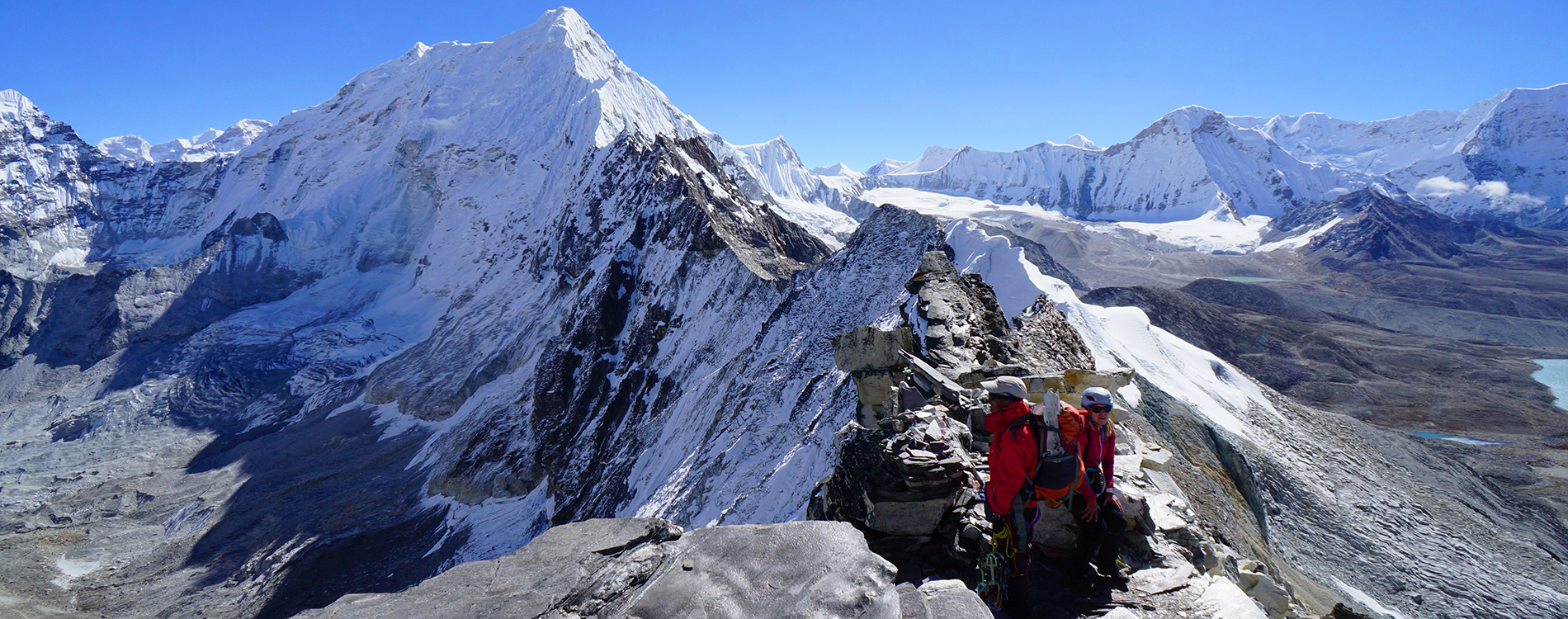
The Sherpani Col Pass Trek are over 6,000 meters. Between Makalu and Everest, it crosses the mountain range. In order to climb the high passes of the “Three Cols”—Sherpani Col, West Col, and Amphu Labsta this trek combines cross-country hiking with mountaineering using fixed ropes and possibly an ice axe. The Great Himalayan Trail, a recently opened route that traverses the nation from east to west through some of the most difficult and breathtaking scenery, now includes this hike.
Being one of the most difficult parts of the Great Himalaya Trail, it takes exceptional fitness to finish the lengthy weeks of trekking, with most days spent at elevations of 4,000 to 6,000 meters.
The path to Everest Base Camp, where mountaineering expeditions depart to climb Everest, is followed in the latter part of the trek. The trek also stops at Gorakshep and Kala Patthar, the Everest viewpoint, which offers breathtaking views of the tallest mountain in the world! One of Nepal’s largest protected areas, the Makalu Barun region is home to 75 species of mammals, 440 species of birds, and 3,000 species of flowering plants, including several Himalayan orchids. This pristine habitat is home to rare species like the Himalayan Thar, snow leopard, and musk deer. This is one of the reasons it is part of the World Wildlife Fund’s (WWF) Sacred Himalayan Landscape initiative.
Trip highlights
- Magnificent Views: This trip offers views of numerous breathtaking mountains. Makalu and Everest are the two biggest.
- Diverse Landscapes: Trekking through the Makalu Barun National Park at lower elevations offers verdant fields, thrilling river crossings, lush woods, and alpine scenery. As you ascend to higher altitudes, the terrain becomes more arid and stony, with glaciers, snow, and ice in addition to moraine and scree to hike over. The geography of Sagarmatha National Park is first rocky, snowy, and icy, but as you descend in elevation to Lukla, it becomes greener.
- People and Culture: During this walk, you will encounter Sherpa and Rai people. The Makalu side is home to both ethnic groups, but the Everest side is primarily home to Sherpa.
- Unusual Wildlife: The Makalu Barun National Park is home to a diverse range of plant and animal species, such as the red panda and snow leopard. The Everest Region has comparable flora and wildlife. Maybe with the Yeti added
itinerary
- day 1
Arrival in Kathmandu
- Arrival at the Tribhuvan International Airport.
- Our representative will greet you with warm regards and escort you to the hotel.
- Rest of the day is free for making the preparations of the trek that starts the following day.
- Overnight.
- day 2
Kathmandu To Tumlingtar (Flight), Drive to Chichila
Chichila – 1,980 m / 6,496 ft – 4 hrs
✈️ Flight Time: 50 minutes
🛣️ Drive Time: 4 hours
🛏️ Accommodation: Tea House
🍽️ Meals Included: Breakfast, Lunch, and Dinner
📍 Overnight Stay: ChichilaAfter picking you up from your hotel, your guide will drive you to your flight to Tumlingtar. He is coming with you, of course.
Get a coffee and some food at the airport if you didn’t have time for breakfast at your hotel; it might be your last satisfying cup of coffee for a while.
You may reach the Arun Valley in the northeast of the nation with the 50-minute flight. As you get closer to your destination, keep an eye out for the mountains: Mount Everest (8,848 m/29,028.8 ft), Ganesh Himal (7,422 m/24,350.3 ft), and Malaku (8,463 m/27,765). Additionally, you will travel through the foothills and Kathmandu Valley.
Take a public jeep from Tumlingtar to Chichila, where you spend the night.
- day 3
Chichila To Num
Num – 1,040 m / 3,412 ft – 6 hrs
🕒 Trek Time: 6 hours
🛏️ Accommodation: Tea House
🍽️ Meals: Breakfast, Lunch & Dinner
📍 Overnight: NumToday is the first day of your journey! It’s time to get used to the pace of camping as well. Following breakfast, you go through rhododendron trees, which bloom crimson in the spring, while the crew dismantles the camp.
Today’s hike is easy and enjoyable as you over the first of several suspension bridges and drop to the Arun River.
- day 4
Num to Seduwa
Seduwa – 1,500 m / 4,921 ft – 6 hrs
🕒 Trek Time: 6 hours
🛏️ Accommodation: Tea House
🍽️ Meals: Breakfast, Lunch & Dinner
📍 Overnight: SeduwaThis morning, you are greeted by a sharp fall. Trek through forests to the Barun River, then cross the suspension bridge.
After you climb back up on the opposite side of the river, your permits will be examined because you are in Makalu Barun National Park. In the Himalayas, there is an up for every down.
- day 5
Seduwa To Tashi Gaon
Tashi Gaon – 2,100 m / 6,889 ft – 5 hrs
🕒 Trek Time: 6 hours
🛏️ Accommodation: Tea House
🍽️ Meals: Breakfast, Lunch & Dinner
📍 Overnight: Tashi GaonThe lower elevations of this hike undoubtedly have rhododendron woods. They are the national flower of Nepal, in case you were unaware.
Proceed to your overnight camp site at Tashi Gaon after passing via the villages of Hindrungma and Rupisa.
- day 6
Tashi Gaon To Khongma Danda
Khongma Danda – 3,500 m / 11,482 ft – 7 hrs
🕒 Trek Time: 7 hours
🛏️ Accommodation: Tea House
🍽️ Meals: Breakfast, Lunch & Dinner
📍 Overnight: Khongma DandaIt’s becoming intriguing now. It’s time for the challenge! Walking becomes more difficult as you ascend to 1,400 meters (4,593.1 feet). You raised your elevation today by the same amount as Kathmandu, to put things in perspective.
The breathtaking vistas of the mountains make up for it. Dhara, which means tap and is called after its natural spring water source, is a good place to stop for lunch. The last climb to Khongma Danda follows a little respite. More stunning views of Chamlang, Peak 6, Makalu, and other locations can be found from Khongma Danda.
- day 7
Acclimatization Day
Khongma Danda – 3,500 m / 11,482 ft – 2 hrs
🍽️ Meals: Breakfast, Lunch & Dinner
📍 Overnight: Khongma DandaYou will be at a high altitude for the following two weeks, therefore we give you an acclimatization day at Khongma Danda to get you ready. Now is the moment to pay close attention to your body and search for any symptoms of disease related to altitude.
There is time today to get to know some of the Sherpas in this hamlet, observe them going about their everyday lives, and understand that not all Sherpas are mountain climbers.
Additionally, you will already be well acquainted with the camping lifestyle you have chosen for this journey. Savor the camp setting and maybe assist with lunch preparation. There’s no pressure.
- day 8
Khongma Danda To Dobato
Dobato – 3,500 m / 11,482 ft – 6 hrs
🕒 Trek Time: 6 hours
🛏️ Accommodation: Tea House
🍽️ Meals: Breakfast, Lunch & Dinner
📍 Overnight: DobatoYou will cross two passes today. Begin by trekking to the Ghungru La Pass at 4,055 meters (13,303.8 feet) along a ridge. After that, continue hiking to Keke La Pass, which is 4,170 meters (13,681 feet) high. The passes are neither very high nor difficult to cross. Excellent preparation for the future.
One of the highlights is the breathtaking views of the mountains from the top of the passes.
- day 9
Dobato To Yangla Kharka
Yangla Kharka – 3,557 m / 11,669 ft – 7 hrs
🕒 Trek Time: 7 hours
🛏️ Accommodation: Tea House
🍽️ Meals: Breakfast, Lunch & Dinner
📍 Overnight: Yangla KharkaHike to the Barun River in a rhododendron woodland to start the day. Yaks are likely to be seen grazing in the pastures. You will actually spend the night on a meadow with breathtaking views of the mountains. As the sun sets, take in the mountains and the stars. Is there anything greater than this?
- day 10
Yangla Kharka To Langmale Kharka
Langmale Kharka – 4,410 m / 14,468 ft – 6 hrs
🕒 Trek Time: 6 hours
🛏️ Accommodation: Tea House
🍽️ Meals: Breakfast, Lunch & Dinner
📍 Overnight: Langmale KharkaThe altitude will increase by over 1,000 meters (3,280.8 feet) on this day as well. Go slow today, take lots of breaks, and drink plenty of water to minimize any potential altitude-related issues.
The trail climbs steeply through woodlands, rhododendron forests, alpine meadows, and meadows.
Tonight’s camp is located on a yak herd summer pasture. Peak 3, Peak 4, Peak 5, Chamlang, and Hongku Chuli are the mountains that are visible there. Very amazing.
- day 11
Langmale Kharka To Makalu Base Camp
Makalu Base Camp – 4,870 m / 15,977 ft – 6 hrs
🕒 Trek Time: 6 hours
🛏️ Accommodation: Tea House
🍽️ Meals: Breakfast, Lunch & Dinner
📍 Overnight: Makalu Base CampYou arrive at the first of the trek’s four base camps today! This one is a little difficult, but you can succeed if you’re determined.
The trail passes through rocky terrain, moraine deposits, and possible areas of snow and ice. You might need crampons. As usual, the rewards are breathtaking views of snow-capped mountains and the Barun Glacier.
The fifth-highest peak in the world, Makalu, stands in front of you when you arrive at Base Camp. Malaku, which is 8,485 meters (27,838 feet) high and roughly 19 kilometers (12 miles) southeast of Mount Everest, is a part of the Mahalangur Himalayas.
- day 12
Makalu Base Camp to Swiss Base Camp
Swiss Base Camp – 5,150 m / 16,896 ft – 6 hrs
🕒 Trek Time: 6–7 hours
🛏️ Accommodation: Tea House
🍽️ Meals: Breakfast, Lunch & Dinner
📍 Overnight: Swiss Base CampUp until it encounters lateral moraine, the trail travels along the west edge of the Barun Glacier. You must hike over slopes on this rough trail. As you continue on this long day at high altitude, you will see breathtaking vistas of the ridges of Makalu, Everest, and Lhotse.
- day 13
Acclimatization Day
Swiss Base Camp – 5,150 m / 16,896 ft – 3 hrs
🍽️ Meals: Breakfast, Lunch & Dinner
📍 Overnight: Swiss Base CampHere at Swiss Base Camp, we give you the chance to rest, unwind, and explore as your body adjusts to the ever-increasing altitude.
Spend the night sleeping at Swiss Base Camp
- day 14
Swiss Base Camp to Sherpani Col Base Camp
Sherpani Col Base Camp – 5,688 m / 18,661 ft – 5 hrs
🕒 Trek Time: 5 hours
🛏️ Accommodation: Tea House
🍽️ Meals: Breakfast, Lunch & Dinner
📍 Overnight: Sherpani Col Base CampHiking on these rough, loose-scree pathways requires caution. After climbing to the top of a valley, you descend to the location of the next camp.
The mountain scenery is just as rough, with breathtaking peaks all around you.
It’s not a long walk today, but it’s at a high altitude, so when you get to the camp, relax and get ready for tomorrow’s even higher climb.
- day 15
Sherpani Col Base Camp to Baruntse Camp
Baruntse Camp – 6,050 m / 19,849 ft – 8 hrs
🕒 Trek Time: 8–9 hours
🛏️ Accommodation: Tea House
🍽️ Meals: Breakfast, Lunch & Dinner
📍 Overnight: Baruntse CampWith two mountain passes to cross—Sherpani Pass at 6,155 meters (20,223 feet) and West Col Pass at 6,143 meters (20,154 feet)—this is the hardest day of the walk.
In order to escape the late morning weather, which is expected to include strong gusts and a bright sun, you depart before dawn in order to complete this difficult trek. There will be snow and ice to negotiate, and the climbs are difficult. There will be fixed ropes to cross the Sherpani Pass.
Cross the West Col and descend into the West Barun Glacier Valley after passing this pass. From here, descend to Baruntse Camp via the Hunku Glacier, another glacier.
- day 16
Baruntse Camp to Honku Basin
Honku Basin – 5,500 m / 18,044 ft – 5 hrs
🕒 Trek Time: 7 hours
🛏️ Accommodation: Tea House
🍽️ Meals: Breakfast, Lunch & Dinner
📍 Overnight: Honku BasinYou are heading to a much lower altitude today, which will undoubtedly make breathing easier after a restful night’s sleep and a filling meal.
Today, you will encounter rocky pathways, glacial moraines, and the high-altitude Honku River.
The camp site at Honku Basin is a great place to spend the night, surrounded by the ever-present mountains.
- day 17
Honku Basin to Amphu Laptsa Base Camp
Amphu Laptsa Base Camp – 5,527 m / 18,134 ft – 5 hrs
🕒 Trek Time: 5 hours
🛏️ Accommodation: Tea House
🍽️ Meals: Breakfast, Lunch & Dinner
📍 Overnight: Amphu Laptsa Base CampVisit Amphu Laptsa Base Camp, which is located at 5,527 meters (18,134 feet), your third base camp, today.
Once more, the trail is difficult due to the ice, pebbles, boulders, and scree. You can get through this day of pushing your body to its limits if you focus on the stunning mountains and glaciers you will see.
- day 18
Acclimatization Day
Amphu Laptsa Base Camp – 5,527 m / 18,134 ft – 5 hrs
🍽️ Meals: Breakfast, Lunch & Dinner
📍 Overnight: Amphu Laptsa Base CampAfter the strenuous trekking you have been undertaking, today is a day to unwind. On the other hand, you are also getting your body ready for the last mountain pass test tomorrow.
Enjoy the scenery and engage in some light workout. Check to see if there is anything you can do to assist with the camp.
Spend the night sleeping at Amphu Laptsa Base Camp.
- day 19
Amphu Laptsa Base Camp to Chukung
Chukung – 4,730 m / 15,518 ft – 9 hrs
🕒 Trek Time: 9 hours
🛏️ Accommodation: Tea House
🍽️ Meals: Breakfast, Lunch & Dinner
📍 Overnight: ChukungIt’s a strenuous hike and another pass to cross today to get to Chuking after your leisurely stay at base camp. You are in the Everest Region once you have passed the Amu Lapcha Pass and entered the valley beyond.
Ama Dablam, Lhotse Shar, Lhotse South Face, and other locations can be seen from the pass.
As you are aware, the Everest Region is well-known for hiking and climbing, therefore you will start to see a lot more hikers on the paths.
- day 20
Chukung to Tengboche
Tengboche – 3,960 m / 12,992 ft
🕒 Trek Time: 9 hours
🛏️ Accommodation: Tea House
🍽️ Meals: Breakfast, Lunch & Dinner
📍 Overnight: TengbocheYou will visit locations whose names are well-known even to non-climbers, making this a thrilling day.
The Sherpa villages of Dingboche and Pangboche have a longer cultural heritage than the tourism sector. The oldest monastery in the area is Pangboche Monastery. Take a quick look around the monastery and take in the stunning architecture.
Going on, Tengboche is the highest monastery in the area, if not the entire nation. There are breathtaking sweeping views of Everest and other nearby mountains from its grounds. Spend some time in this monastery and consider going to either the early morning or evening puja (religious ceremony).
- day 21
Tengboche to Monjo
Monjo – 2,700 m / 8,858 ft
🕒 Trek Time: 9 hours
🛏️ Accommodation: Tea House
🍽️ Meals: Breakfast, Lunch & Dinner
📍 Overnight: MonjoAs you descend into Sagarmatha National Park, you will note that the scenery is becoming more verdant. There are a few river crossings that need the use of lengthy suspension bridges.
You may stop by Namche Bazaar today for lunch and a delicious cup of coffee (finally!).
Enjoy the breathtaking vistas of the mountains as you hike; your journey is almost over. Enjoy every second that remains.
- day 22
Monjo to Lukla
Lukla – 2,840 m / 9,317 ft
🕒 Trek Time: 9 hours
🛏️ Accommodation: Tea House
🍽️ Meals: Breakfast, Lunch & Dinner
📍 Overnight: LuklaOn the final day of your journey, leave after breakfast and travel through lush vegetation, across rivers, and down to the airport town of Lukla, where you will wait for your early flight.
Although it’s a sad day to say goodbye to your camping group, you can look forward to the bustle of Kathmandu. And more delicious coffee! So, enjoy this evening with your guide and other hikers.
- day 23
Lukla to Kathmandu (Flight)
Kathmandu – 1,300 m / 4,265 ft
✈️ Flight Time: 40 minutes
Not satisfied with this itinerary?
Make your own.Price Included
✅ 21 nights accommodation in tents
✅ Kathmandu–Tumlingtar and Lukla–Kathmandu flights
✅ Local Jeep from Tumlingtar to Chichila
✅ Cook for 22 days
✅ Guide for 22 days
✅ Required number of porters for 22 days
✅ Makalu Barun National Park Entry Permit
✅ Sagarmatha National Park Entry Permit
✅ TIMS Card (Trekkers’ Information Management System)
✅ 22 set breakfasts, 21 set lunches, and 21 set dinners during the trek
Price Excluded
❌ Accommodation and meals in Kathmandu
FAQ
-
Are the trekking guides and porters licensed/certified?Yes, usually guides and porters have to be licensed and certified in Nepal. It is known that the MoCTCA of Nepal issues licenses to the guide for trekking, ensuring proper training and knowledge of safety, navigation, and first aid.Many guides are certified through a recognized training program, often through the NMA or another accredited agency. In the case of porters, while licenses may not necessarily be in order, it's possible to hire them through reputable trekking companies that make priorities of safety and fair treatment.This means that at the time of booking a trek, it is worth confirming whether or not guides and porters are certified to ensure one will have a safe and enjoyable experience.
-
Are the trekking restaurants available at trekking places?Yes, there are many trekking restaurants or 'tea houses' along popular routes in Nepal. These places have simple accommodation and food for trekkers. Here's what you'd usually expect:Meal Options: Most of the tea houses offer a range of local cuisines that include dal bhat, momos, noodles, and pancakes. Most of these places also sell snacks and hot drinks.Accommodation: Most tea houses have simple rooms where trekkers can stay overnight and have well-deserved rest after a very long day of trekking.Variety: The quality and variety of food differ according to the region and the altitude. You will get more options in the so-called popular trekking areas like the Annapurna and Everest regions.Social Atmosphere: Most of the time, the tea houses allow trekkers to come together, share their experiences, and enjoy a warm meal together.Availability: Availability is very common along the well-traveled routes; however, it is quite infrequent in areas that are considered to be more remote. So, better check your route and plan your trip accordingly.
-
Are there any age limits for this trek?Generally, there are no strict age limits for trekking in Nepal, as much of it depends upon the individual fitness and experience of the people concerned. The following are a few important aspects to consider:Children Most trekking companies welcome children to go on family-friendly treks, mainly on popular routes such as the Annapurna and Everest regions. Naturally, one would have to be careful in choosing a trek that would suit the child's fitness and capability.Older Adults Participation by older trekkers is also allowed, provided there is good health and stamina to take on the demands of the trek. However, the recommendation is in advance to consult with an old age doctor before going on a trek.Group Considerations Agencies also have age limits for all or specific treks and routes that require further and more critical conditions. In this respect, discussion of such issues with the agency through which one has booked is relevant.Safety Trekkers of any age must pay attention to altitude sickness. Weather conditions may suddenly change. All trekkers should allow for adequate acclimatization and pacing.
-
Are you trekking guides and porters trained for first aid?Yes, many trekking guides and porters in Nepal undergo basic first aid training. This training typically covers
- The guides learn basic first-aid abilities, thus enabling them to deal with ordinary injuries and sudden ailments such as cuts, sprains, and altitude sickness.
- Altitude Sickness Awareness They have particular training in the recognition and management of altitude sickness symptoms, including the administration of oxygen when necessary.
- Emergency Response Guides are trained in assessing situations and taking necessary actions, which may include the evacuation of trekkers if necessary.
- Basic First Aid Kits Many guides carry with them a basic first-aid kit that may include supplies to treat minor injuries.
- However, the training may vary, and it's always advisable to make inquiries about experience and qualifications from your guide or trekking agency. Always consider personal insurance that covers medical emergencies on a trek.
-
Can I customize the itinerary from your website?Yes, you can do so from the website, but to a certain extent. Please note that for a more personalized experience, we highly recommend contacting us via email or over the phone. This is so we can get a better understanding of your personal interests and tailor your itinerary according to your needs.
-
Can I continue my trek if I got sick?Continuing your trek after getting sick is generally not advisable. Here are some key considerations1. Assess Your Symptoms Mild Infection If minor - such as a headache or light stomach ache you may be able to rest and carry on. However, listen to your body.Severe Symptoms If any of the following symptoms persist, such as severe headache, repeated nausea, dizziness, or any symptoms of AMS, do not continue.2. Altitude Sickness Urgent Action The only thing you can do if you feel that you have altitude sickness is to go down to a lower height. Continuing to trek to high altitude means your case is deteriorating.3. Rest and Recovery Rest for A While Sometimes all you need is rest for one or two days. You can always inform your guide, who will help modify the schedule accordingly.4. Consult Your Guide Professional Advice Your guide will be trained to observe your condition and make intelligent decisions about your continuation or descent.5. Safety Above All Health First Trekkers should not commence the trek if they are ill as it will prove risky for themselves and others in the group.6. Emergency Plan Know your options: Know how to get back down to a lower elevation or seek medical attention if you need to.What this means, more simply, is that if a person does not feel well, then the concrete evaluation of being sick should be highly considered for taking priority over the continuation of the trek.
-
Do I need to buy or can hire trekking gears?Treiking in Nepal, you can buy or hire trekking gear. The elaboration of the two is below:Hiring Trekking Gear Availability You find a number of shops in towns like Kathmandu and Pokhara where you get trekking gear on hire, including sleeping bags, trekking poles, jackets, and boots. Cost-Effective Renting can be cheaper since not everyone may be trekking regularly.Variety and Quality Most rental shops have a selection of good gear. If you're not quite sure what you want to buy, this is an added advantage.Convenience You will not have to travel with extra luggage when you rent equipment.Buying Trekking Equipment Personal Preference: Owning your own personal gear may be a much better option if you plan on trekking more often.Familiarity Owning your equipment only means that you have gotten used to the equipment, which might increase your trekking experience.Durability The better the quality of equipment you purchase, the better performance and longevity you get on future treks.Recommendations Renting: If you're new or just going for a small trip, then renting is practical.Buy: For frequent trekkers, buying essential items such as boots, a backpack, and a sleeping bag will give comfort and better fits. Conclusion Both have their merits, so consider the plans you have for trekking and the frequency to opt for what suits you best. For recommendations of rental shops or specific gear, just let me know!
-
How difficult is trekking in Nepal?It is important to note that trekking in Nepal can be graded from easy, moderate, to strenuous and challenging based on many factors, including the specific trek, altitude, and weather conditions, and your personal level of fitness. A detailed breakdown follows.1. Trek Types Easy Treks Suitable for beginners with basic fitness. Examples include the Ghorepani Poon Hill trek and the Kathmandu Valley trek. These treks normally have lower altitudes and shorter daily distances.Moderate Treks Good for people having some trekking experience. The treks include Langtang Valley and Gosaikunda, and good physical fitness is required as the gradient of heights are more and steeper.Difficult Treks Fit for experienced trekkers. These treks include the Annapurna Circuit and Everest Base Camp. They contain difficult terrain, noticeable altitude gain, and longer lengths of time out on the trail.2. Altitude High Altitude Effects Many popular treks reach altitudes over 3,000 meters (10,000 feet). There is an increased risk of altitude sickness with the gain in altitude. Proper acclimatization is imperative. Symptoms of Altitude Sickness Symptoms include headaches, nausea, dizziness, and fatigue. Recognition and management of symptoms are important.3. Terrain and Conditions Varied Terrain Expect rocky paths, steep ascents and descents, with slippery conditions at times. Weather Conditions change suddenly rain, snow, and low temperature impact trekking conditions.4. Physical Fitness Preparation A good level of physical fitness is a necessity. Cardio, strength training, and rehearse hiking with a loaded rucksack before coming on your trek.Pacing Take your time and listen to your body. Overexertion leads to exhaustion; it raises the risk of getting altitude sickness.5. Duration Trek Length Treks can vary from a few days up to several weeks. The longer treks are going to be quite demanding and exhausting.6. Guided vs. Independent Trekking Guided Treks A guide will involve support, local knowledge, and navigating challenges.Independent Trekking Self-sufficient, requires more navigation skills and experience in managing risk.7. Conclusion The trekking in Nepal allows for great views and cultural experiences however, most of the treks can be very challenging on the body. It is very important not only to understand the specific challenges of any given trek but also to prepare for them. Since you will always be at a different height, acclimatization and hydration must become your utmost priorities. Do not hesitate to seek help from guides or fellow trekkers when you need it.
-
Is all your departure guaranteed to run?A guaranteed departure means that the tour will definitely operate on the day it is scheduled and will not be cancelled. All departures will run except in the event of a natural disaster or other similarly disruptive events that are beyond our control.Almost all of our tour departures are guaranteed to run. Some tours are guaranteed more than 1 year ahead of time. Others may not be guaranteed until 2 months ahead of time. Every week we receive more bookings and this allows for more guaranteed departures.Our itineraries are based on historical and current weather patterns, schedules and popular periods. Our itineraries are flexible so that the more people who book tours which are not 'guaranteed departures', the more tours we can name as guaranteed departures.
Review

Tom And Heide
18/09/2018
AMAZING NEPAL EXPERIENCE WITH Nepal Tour Guide Team
We had the privilege exploring KTM valley with Kumar. He has a way of showing you all facets of Nepal as nobody else will. Not only does he know his country like no other, he also has a special way of connecting you with his culture , people, customs and more like a real tour guide can only do. He is a humanitarian, a good spirit, with a great sense of humor and a heart of gold, someone who CARES about his country and people. You will love the way he guides you and shows you his country. Anything from local foods, to extensive history or just small talk about politics and social issues, Kumar is happy to discuss all. He showed us a side of Nepal, we would have never experienced with a larger bus group. He customized our program to our liking, the way we wanted it, patiently answered all of our questions always friendly , attentive and genuine. We can highly recommend Kumar as your private guide. I have traveled the world extensively (please see my other reviews on tripadvisor) and know the difference between ‘just a guide’ and a true tour director who LOVES his job and connecting with people from all walks of life. Kumar is great in what he does and his personality will make you like him the day you meet. We are still friends and should we return to Nepal, there is no doubt in our minds that we will see him again, not only as our guide but also to reunite with a great friend and human being.

Adam Szucs
01/01/1970
Memorable 4 Days With Tour Guide
My wife and I had the privilege to enjoy a 4 days long private tour with tourguideinnepal.com. Everything was spot on. We had a private driver and a private tour guide for the entire trip, both extremely polite. I can 100% recommend them to others also. I also found their pricing more than fair. Kumar runs the company, he was very helpful when we put together the custom itinerary. Our tour guide was Suvash, probably the most caring guy I’ve ever met. Thanks for the lifetime experience guys!

Aristofanes Cedeno
01/01/1970
One Week in Nepal With Tour Guide
I recently spent one week in Nepal and Tour Guide Team Trek provided an extraordinary service with an itinerary suited to my needs and interests, including Kathmandu, Chitwan, and Pokhara, detailed cultural and historical explanations when visiting different sites in Kathmandu, and above all, a customer and people-oriented approach to all activities, meals, shopping, etc. Kumar Dahal was my tour guide and it was a pleasure for me to have him showing me his native Nepal. Kumar has excellent English speaking skills and he is willing to take the extra mile to help you have the best trip to this beautiful country. I recommend him and Nepal Tour Guide Team Trek wholeheartedly as the best agency to fulfill your expectations.

Brad Wegner
01/01/1970
Two Nights Was Awesome
I only had two nights in Kathmandu and primarily wanted to do a chopper flight around Everest as well as see as much of Kathmandu as possible. Kumar was amazing and looked after me like family. I did a lot of research and Kumar booked the Chopper flight for me and answered any and all questions I had leading up to it. The Everest day was truly one of the best and awe inspiring days of my life. Kumar also took us to all of the must see sights in Kathmandu. He listened to our needs as well as read our body language for what we required. You must have a guide in places like Kathmandu to understand the history and not miss anything and you won’t regret using Kumar – he is the best!!

Two Weeks In Nepal
We came to Nepal for just under two weeks in March 2017. My husband and I decided to bring my mom for her 60th birthday as it was her lifelong dream to visit Nepal. But weren’t sure what to do while we were there! Luckily, we found Nepal Tour Guide Team, and after a few emails to Kumar, he set up the whole trip for us. Our trip was incredible, and Kumar was wonderful. From Kathmandu to Chitwan, Pokhara and back, Kumar showed us the whole country, and his knowledge was second to none. He arranged all the hotels, the car and driver, the things we did, showed us great places to eat and most importantly, provided great friendship and conversation along the way! We laughed the whole trip and had a wonderful time. The mountains were beautiful, Chitwan was amazing, and the lakeside at Pokhara was definitely my mom’s favorite part. We’re still positive we had the best tour guide and the most skilled driver in the entire country. Kumar is an incredible person and we made a lifelong friend. Even after coming home, we continue to keep in touch, chatting and making video calls. We can’t wait to go back!
Write a review
Quick enquiry

Still confused?
Talk to our expert.

Kumar Dahal

