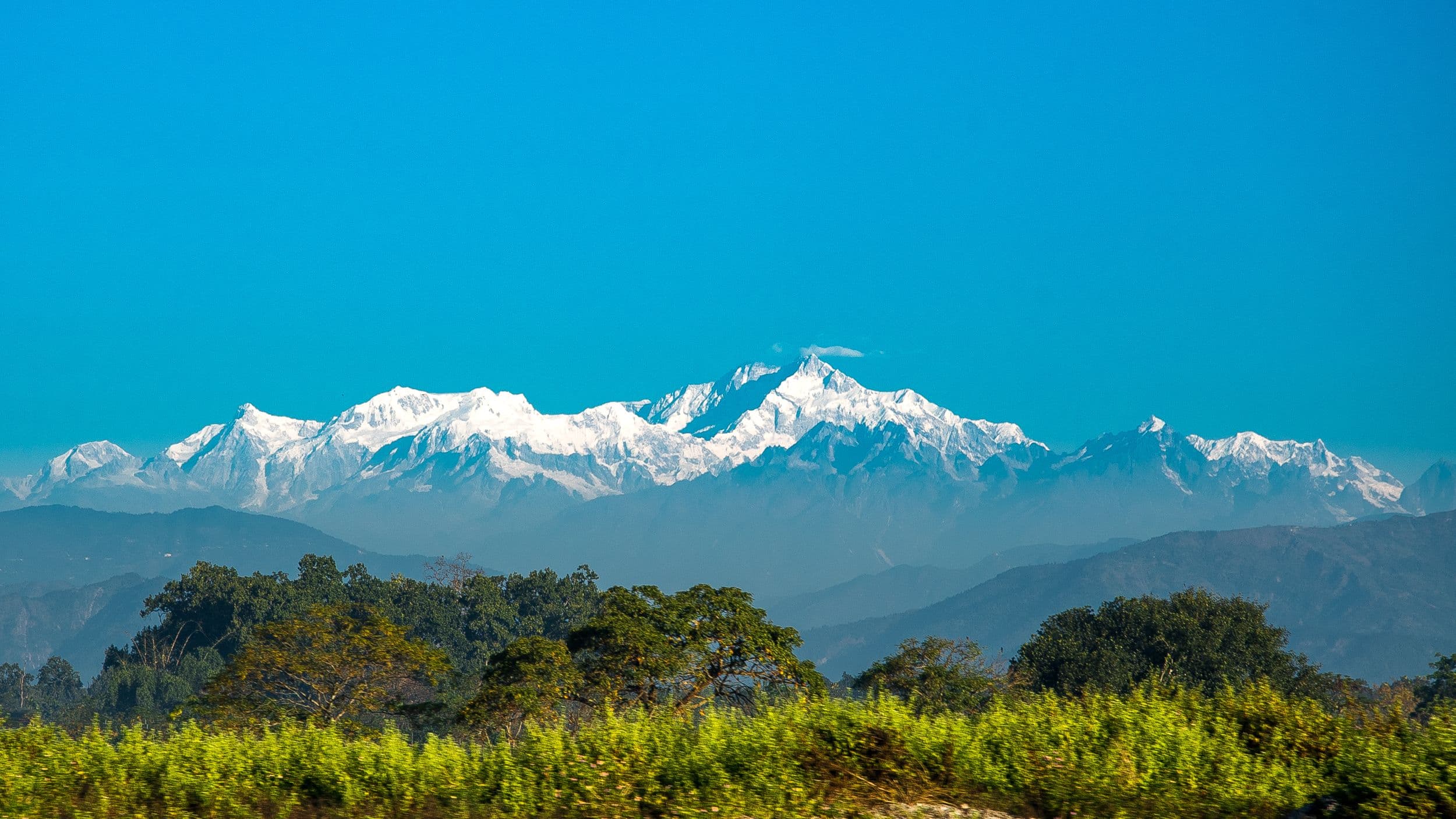
Kanchenjunga Region
Trekking in far-eastern Nepal to the base of Mount Kanchenjunga (8,586m), the third-highest mountain on Earth, surrounded by lush rhododendron wilderness and Rai/Limbu heritage.
Kanchenjunga Region
Kanchenjunga, once believed to be the world’s highest mountain, stands today as the third-highest peak on Earth after Mount Everest and K2. Located about 128 kilometers east of Everest, this majestic Himalayan giant straddles the border between Nepal and India’s Sikkim state. The name Kanchenjunga, or Kangchenzonga, translates to “The Five Treasures of the Great Snow,” referring to its five awe-inspiring summits — Kanchenjunga Main (8,586m), Yalung Kang (8,505m), Kanchenjunga West (8,420m), and the Twin Peaks (8,476m each).
Unlike many other Himalayan ranges, the Kanchenjunga massif stretches north to south, with the Tamur River — a tributary of the Koshi — meeting the Kanchenjunga Glacier below its snowy slopes. For decades, this magnificent mountain remained unconquered despite several daring attempts. The first recorded expedition dates back to 1882, but the initial climb was not attempted until 1905 by Alastair Crowley, who reached the Yalung Glacier. Unfortunately, the journey ended tragically with the loss of four members, including Lieutenant Pache, prompting a 15-year pause in expeditions.

In 1929, American climber Francis Farmer made a solo attempt via the south face but never returned. That same year, German mountaineer Paul Bauer led a Bavarian team to a height of 7,700 meters. Subsequent expeditions followed, including Bauer’s second attempt in 1931, during which Dr. Karl Wien and Hans Hartman were forced to retreat just 596 meters below the summit.
Climbing activities in the Himalayas halted during World War II but resumed in the early 1950s. In 1951, Gilmour Lewis and George Frey explored a new route, followed by further attempts in 1953 and 1954, all of which ended unsuccessfully. Finally, in 1955, a British expedition led by Charles Evans, who had participated in the historic 1953 Everest ascent, achieved success. On May 25, climbers Joe Brown and George Band reached within five vertical feet of the summit, intentionally stopping short to honor the mountain’s sacred status among the Sikkimese people.
Kanchenjunga was officially conquered. Its place in mountaineering history. Later, on May 14, 1980, Ang Phurba Sherpa became the first Nepali climber to summit Kanchenjunga, marking a proud moment for Nepal’s mountaineering legacy.
Today, Kanchenjunga remains a symbol of Himalayan grandeur, drawing mountaineers and adventurers from around the world with its untamed beauty, spiritual reverence, and historical significance.
Best Time to Visit & Trek in Kanchenjunga Region
Himalayan weather varies significantly by altitude and month. Review our seasonal guide to choose the optimal window for your adventure.
Autumn (Peak Season)
September – NovemberThe quintessential Himalayan trekking season. Crisp crystal-clear skies, spectacular visibility of snow peaks, and warm daytime walking temperatures.
Spring (Rhododendron Season)
March – MayLong sunny days and mild alpine temperatures. Valley forests erupt into vibrant red, pink, and white rhododendron blossoms with active wildlife.
Winter (Serene & Crisp)
December – FebruaryBrilliant blue skies and uncrowded trails with dramatic snow vistas. High passes may experience deep snow; ideal for cultural tours and lower routes.
Summer / Monsoon
June – AugustLush green terraced hillsides and roaring alpine rivers. Rain-shadow trans-Himalayan valleys like Upper Mustang and Nar Phu remain arid and dry.

Plan a Custom Kanchenjunga Region Adventure
Prefer flexible dates, a private guide pace, or luxury lodge upgrades? Talk directly with our founder & lead guide Kumar Dahal (20+ years guiding across Nepal, Tibet & Bhutan). 100% customized with zero middleman markups.
Loading tour packages...
Comparing Top Kanchenjunga Region Treks & Itineraries
Side-by-side breakdown of duration, maximum elevation, trekking difficulty, and pricing to help you choose the ideal route for your Himalayan adventure.
| Trek / Package | Duration | Difficulty | Max Altitude | Best Season | Starting Price | Action |
|---|---|---|---|---|---|---|
| Kanchenjunga Circuit Trek | 19 Days | strenuous | 5143 m / 16873 ft (Pangpema) | Spring (March-May) | $2,755 | View Route |
| Kanchenjunga South Base Camp Trek | 26 Days | moderate | 4160 m | September to November and March to May | $2,255 | View Route |
All packages include government-certified Sherpa guide, TIMS permit, National Park entries, luggage porter, and teahouse stays.
