Guide to Planning the Perfect Nepal Cultural Tour
Key Takeaways & Guide Summary
When most people think of Nepal, their minds immediately go to towering, snow-capped peaks. However, for those willing to look past the...
- Verified Advice: Authentic trail insights by licensed guide Kumar Dahal.
- Seasonal Safety: Altitude awareness, weather windows, and pack lists.
- Permits & Rules: TIMS cards and National Park regulations covered.
- Direct Support: Free personalized route consultations available.
When most people think of Nepal, their minds immediately go to towering, snow-capped peaks. However, for those willing to look past the high-altitude trails, Nepal reveals itself as a living museum of ancient art, deep spirituality, and vibrant ethnic diversity. A dedicated Nepal cultural tour offers an immersive journey through medieval city-states, sacred pilgrimage sites, and communities that have maintained their unique traditions for centuries.
Whether you have a few days to explore the Kathmandu Valley or two weeks to travel across the country, a cultural itinerary provides a profound connection to the heart of the Himalayas. In this guide, we will break down the must-see heritage sites, how to time your trip around spectacular 2026 festivals, and the best ways to immerse yourself in local life.

The Heart of the Journey: Kathmandu Valley Heritage
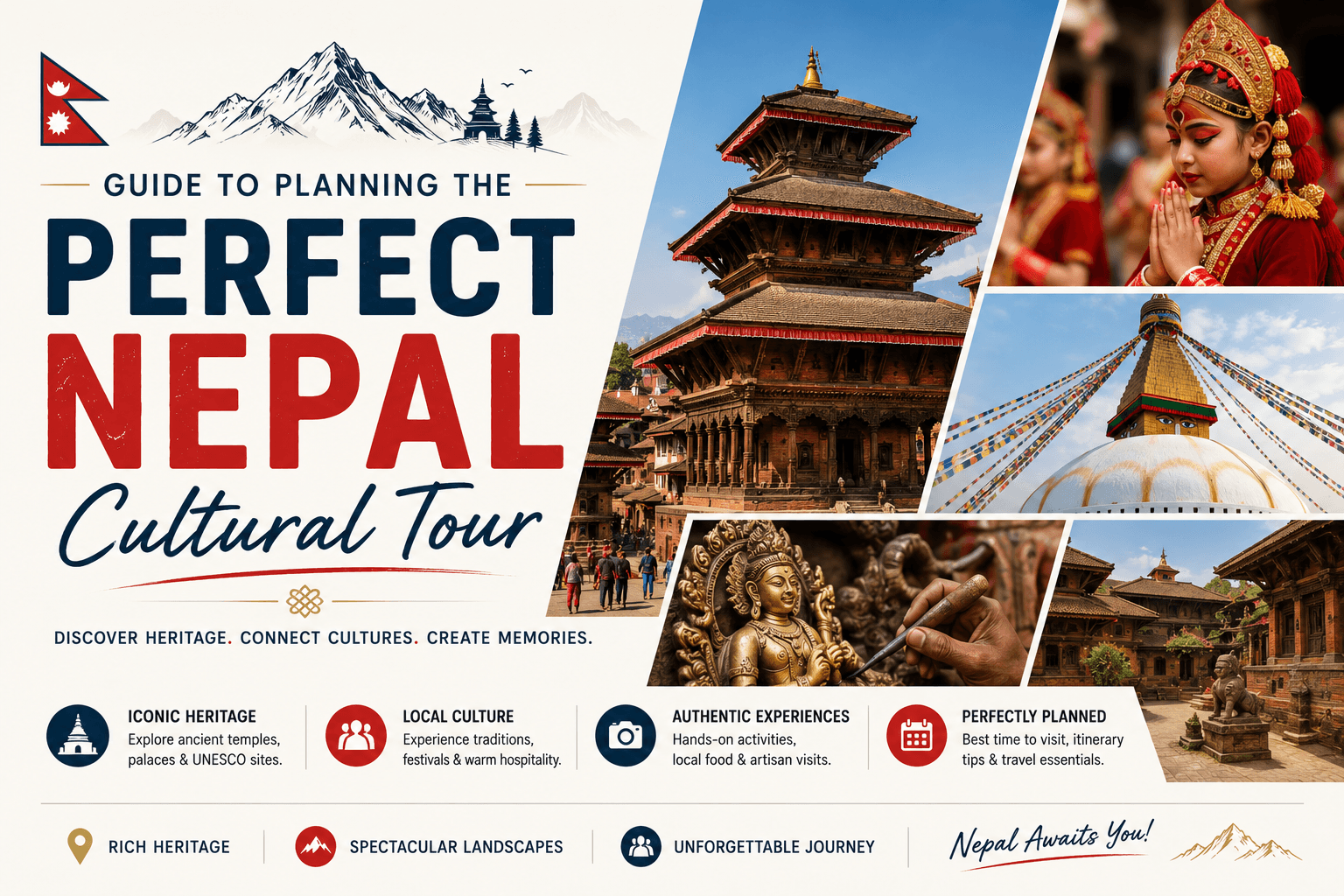
The cornerstone of any Nepal cultural tour is the Kathmandu Valley. Historically divided into three separate, fiercely competitive kingdoms, the valley is home to seven of Nepal's ten UNESCO World Heritage Sites.
The Three Medieval Durbar Squares
Each of the valley's three main cities boasts a Durbar (Royal) Square, featuring breathtaking examples of Newar craftsmanship, brick-paved courtyards, and pagoda-style temples.
- Kathmandu Durbar Square (Basantapur): The historic heart of the capital. It is home to the Kumari Ghar, the residence of Nepal's living goddess (the Kumari), a pre-pubescent girl venerated as the incarnation of the Hindu goddess Taleju.
- Patan Durbar Square (Lalitpur): Known as the "City of Fine Arts." It is famous for its intricate metalwork, the spectacular stone Krishna Mandir temple, and the outstanding Patan Museum, which houses a brilliant collection of bronze statues.
- Bhaktapur Durbar Square: The most preserved of the three cities. Because it is largely traffic-free, walking through Bhaktapur feels like stepping back in time. It is famous for the 55-Window Palace, the towering Nyatapola Temple, and its vibrant pottery culture.
To ensure you don't miss the historical context and hidden alleys of these cities, booking a dedicated Kathmandu Valley Tour or a specialized Nepal Heritage Tour with a local guide is highly recommended.
The Sacred Stupas and Temples
A true Nepal cultural tour bridges both Hinduism and Buddhism, religions that coexist harmoniously here.
- Swayambhunath (The Monkey Temple): Perched on a hill overlooking the city, this ancient Buddhist stupa is one of the most sacred sites in Nepal and offers sweeping panoramic views.
- Boudhanath Stupa: The spiritual center for Nepal’s Tibetan Buddhist community. Walking clockwise around the massive white dome alongside monks spinning prayer wheels is a mesmerizing experience.
- Pashupatinath Temple: The holiest Hindu temple in Nepal, dedicated to Lord Shiva, located on the banks of the Bagmati River. Here, visitors can respectfully observe open-air cremation ceremonies on the river ghats.
Expanding Your Itinerary: Culture Beyond the Valley
While the Kathmandu Valley is dense with heritage, traveling outside the capital reveals the diverse ethnic tapestry of the country. A comprehensive Nepal Tour Package 16 Days will often incorporate these regional cultural hubs:
Lumbini: The Birthplace of Buddha
Located in the southern Terai plains, Lumbini is a profound pilgrimage site for Buddhists worldwide. The sacred Maya Devi Temple marks the exact spot where Siddhartha Gautama was born over 2,600 years ago. The surrounding area has been developed into an international monastic zone, featuring beautiful monasteries built by countries from all over the world, each in their unique architectural style.
Chitwan: Tharu Village Immersion
Chitwan National Park is famous for wildlife, but it is also the homeland of the indigenous Tharu people. They have maintained distinct traditions, including unique mud-and-reed architecture, vibrant stick dances, and a deep connection to the jungle. Spending a night in a village homestay here offers genuine cultural immersion.
Bandipur and Tansen: Preserved Hill Towns
For a slower pace, visit the meticulously preserved Newar trading town of Bandipur or the historic Magar town of Tansen (Palpa). These towns are free of heavy tourism and offer authentic glimpses into rural Nepalese daily life, making them some of the 10 Best Places to Visit in Nepal Beyond Everest.
Timing Your Tour: The 2026 Festival Calendar
Nepal celebrates over 200 festivals annually. Timing your Nepal cultural tour to coincide with a major festival elevates the experience from simple sightseeing to active participation. Here are key dates to look out for in 2026 [3]:
Festival
2026 Dates
Location/Focus
What to Expect
Holi
March 2 & 3
Nationwide
The vibrant festival of colors; streets are filled with music, dancing, and colored powder.
Bisket Jatra
Mid-April
Bhaktapur
Nepali New Year. Features massive chariot tug-of-wars and the raising of a giant wooden pole.
Indra Jatra (Yenya)
Sept 25 – Oct 2
Kathmandu Durbar Square
Week-long street festival featuring masked dances and the chariot procession of the living goddess Kumari.
Dashain
Mid-October (Main day: Oct 20)
Nationwide
Nepal's grandest Hindu festival celebrating the victory of good over evil. Massive family gatherings and feasts.
Tihar (Festival of Lights)
Mid-November
Nationwide
A stunning five-day festival honoring animals (crows, dogs, cows) and Laxmi, the goddess of wealth. Cities are illuminated with oil lamps and marigolds.
Pro Tip: During major festivals like Dashain and Tihar, many local businesses close, and domestic transport can be heavily booked. Plan your logistics well in advance. For more tips on navigating peak seasons, refer to our Nepal Tour FAQ Guide.
The Culmination: Food and Hospitality
No cultural exploration is complete without delving into the local gastronomy. Nepalese food is a rich blend of Tibetan and Indian influences, heavily utilizing lentils, rice, curries, and momos (dumplings).
To truly celebrate the end of a successful itinerary—whether you've spent the week temple-hopping or have just returned from the trails described in our Complete Trekking Guide in Nepal—book a Cultural Dinner in Kathmandu. These evenings typically feature a multi-course authentic Newari feast or traditional Dal Bhat, accompanied by classical music and folk dances representing the various ethnic groups of Nepal.
FAQs About Nepal Cultural Tours
1. How many days do I need for a good cultural tour?
A 3-day itinerary is sufficient to see the highlights of the Kathmandu Valley. However, for a comprehensive Nepal cultural tour that includes Lumbini, Pokhara, and Chitwan, we recommend a 7 to 10-day package. You can find excellent itinerary ideas in our Best Nepal Tours & Treks 2026 post.
2. Is it okay to take photos inside temples?
Rules vary by site. While photography is generally allowed in the courtyards of the Durbar Squares and around stupas, taking photos inside the main sanctums of Hindu temples or Buddhist monasteries is usually strictly prohibited. Always look for signage or ask your guide.
3. What should I wear on a cultural tour?
Nepalese culture is conservative. When visiting religious sites or rural villages, both men and women should wear clothing that covers their shoulders and knees. Slip-on shoes are highly recommended, as you will need to remove them frequently before entering temples and monasteries.
4. Can I participate in local festivals as a tourist?
Absolutely! Nepalese people are incredibly welcoming and often encourage tourists to join in the celebrations, especially during interactive festivals like Holi. Just be respectful of boundaries during solemn religious rituals.
Content Reviewed By
Nepal Tour Guide Team Trek & Expedition Pvt. Ltd.
A licensed trekking and tour operator in Nepal, specializing in unforgettable Himalayan adventures across the Everest, Annapurna, Langtang, and Manaslu regions. Led by experienced local guides, we create safe, personalized, and responsible trekking experiences with expert knowledge of Nepal’s mountains, culture, and trail conditions.
Our TripAdvisor review : Tour Guide in Nepal
Legal document: Tour Guide in Nepal

Ne

Kumar Dahal
Verified Lead GuideGovt. Mountain Guide License No. 2097/073 • Founder of Nepal Tour Guide Team
Kumar Dahal has over 20 years of active high-altitude guiding across Everest, Annapurna, Manaslu, and Langtang. Born in the Himalayan foothills, he specializes in personalized route planning, altitude safety protocols, and authentic cultural immersion for international travelers.
Add Tour Guide in Nepal as Preferred Source on Google
Stay ahead with verified Himalayan trail conditions, permit updates, and authentic Nepal travel guides directly in your Google Search & AI Overviews.
Recent Travel Articles & Guides
Top 3 Wildlife Explorations In Nepal You Shouldn't Miss
Imagine this: the steamy jungle air thick with exotic scents, the calls of unseen creatures echoing through the trees, and...
Rafting Adventure Trips: Calling all Adventure Seekers ♀️
Hey there, awesome friends! Today, let's chat about something super co...
Romance in the Mountains: Valentine’s Day with a Nepal Tour
Welcome to Romantic Holidays in Nepal tour. Embark on an unforgetful journey! Wanting to explore a new destination with the love of your life? So here you go.
