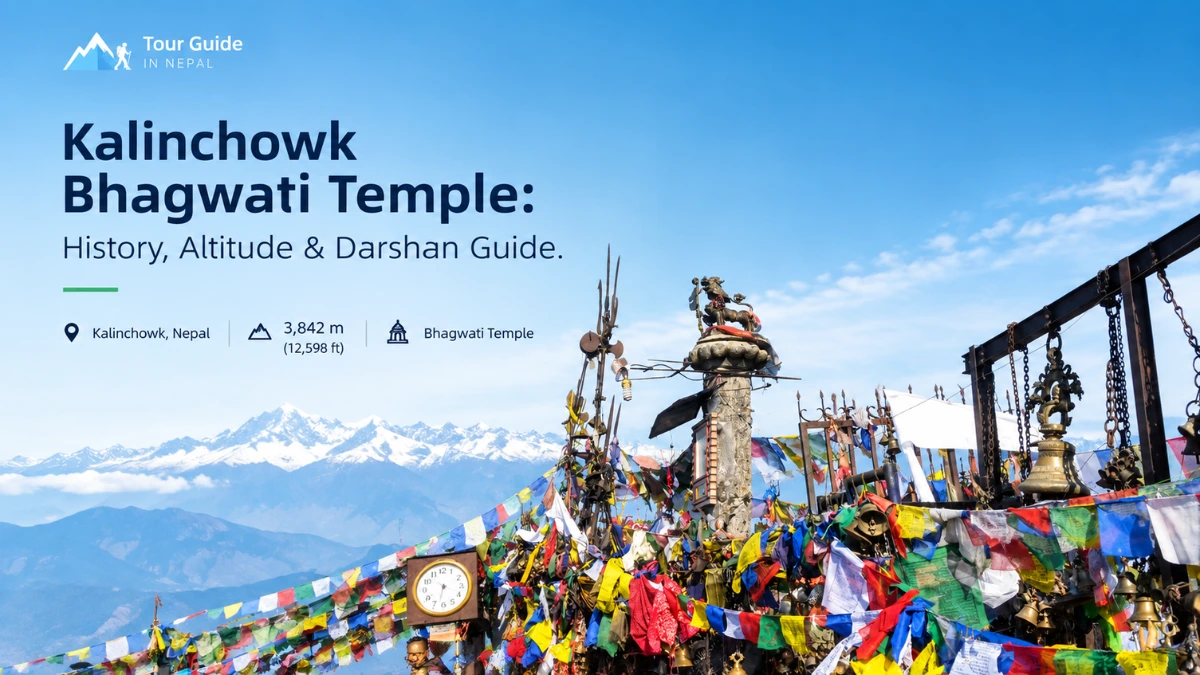
Kalinchowk Bhagwati Temple: History, Altitude & Darshan Guide
Quick summary :
Kalinchowk Bhagwati Temple is a sacred Hindu pilgrimage site in Dolakha, Nepal.
The temple sits at an altitude of 3,842 m (12,605 ft) above sea level.
The shrine is dedicated to Goddess Bhagwati, locally known as Kalinchowk Mata.
The sacred site is associated with a natural Jalakunda and naturally formed Shilas worshipped by devotees.
The common route is Kathmandu → Charikot → Kuri Village → Kalinchowk Temple.
From Kuri Village, visitors can hike for about 1–1.5 hours or take the cable car.
The Kalinchowk cable car covers approximately 2.5 km in about 6 minutes.
October–November generally offers clearer weather and better Himalayan visibility, while winter brings snowfall.
Visitors can enjoy views of Gaurishankar, Jugal Range, Langtang Lirung and other Himalayan peaks on clear days.
Because of the high altitude and changing weather, visitors should acclimatize, dress warmly and check local travel conditions before visiting.
Kalinchowk Bhagwati Temple is a sacred Hindu pilgrimage site located at an altitude of 3,842 meters (12,605 feet) in Dolakha, Nepal. It is traditionally revered as a Shakti Peeth and is dedicated to Goddess Mahakali.
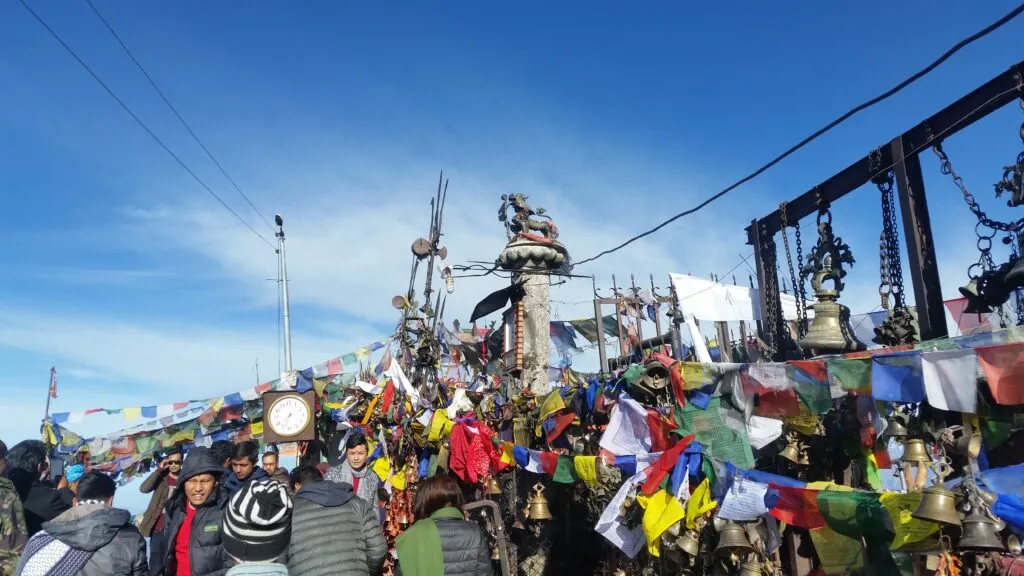
Unlike many traditional Nepali temples, the main shrine is associated with a natural Jalakunda (sacred water pond) and naturally formed Shilas (sacred stones), which devotees worship as manifestations of the goddess. Visitors commonly offer trishuls (tridents), bells, and prayers, seeking the goddess’s blessings, protection, and fulfillment of their wishes.
Perched on a Himalayan ridge, the temple is also a popular destination for travelers seeking spiritual experiences, mountain views, snowfall, and a short Himalayan adventure.
Where is Kalinchowk ? Discover the breathtaking beauty of Kalinchowk with a perfectly planned 3-day trek from Kathmandu, ideal for a memorable Himalayan escape.
September to November is the perfect time to go book your Kalinchowk adventure today and turn your holiday into an unforgettable mountain experience
Kalinchowk Temple Quick Facts
Kalinchowk Bhagwati Temple stands at 3,842 m (12,605 ft) in Dolakha District, Nepal.
Who Is Kalinchowk Mata ?
Kalinchowk Mata is the local form of Goddess Bhagwati worshipped at the Kalinchowk summit shrine. Keep this section factual and careful: explain that Bhagwati is widely revered in Hindu traditions as a goddess associated with divine power, while local stories, origin accounts, and specific wishes offered at this shrine should be confirmed through direct interviews.
Beliefs and Local Legends
- Attribute every local belief to a named source, such as a temple priest, long-serving guide, or Kalinchowk Rural Municipality representative.
- Do not state legends as proven historical facts.
- Add a photo caption identifying the interviewee only with consent.
Local priest interview, recorded on September 12, 2026
“The Goddess Bhagwati here manifests in a natural open Jalakunda rather than an enclosed temple structure. Devotees visit to seek protection, strength, and fulfillment of solemn vows. For visitors coming to perform morning Darshan, we always recommend reaching Kuri Village the evening prior to adapt to the altitude, ensuring you begin the ascent early in the morning when the peak is clear of mist and wind”
How to Spell It : Kalinchowk, Kalinchok, Bhagawati
“Kalinchowk” is the primary spelling used in this guide; “Kalinchok” and “Bhagawati” are common search variants.wikipedia+1
Add a compact search-variant box:
- Kalinchowk Bhagwati Temple
- Kalinchok Bhagwati Temple
- Kalinchowk Mata
- Kalinchowk Bhagawati Temple
- Kalinchowk Temple Nepal
What Is the Altitude and Location of Kalinchowk Bhagwati Temple ?
Kalinchowk Bhagwati Temple is located at 3,842 m (12,605 ft) above sea level in Dolakha District, Nepal.
| Ascent Factor | Physical & Practical Reality | Travel Preparation & Strategy |
| Temperature & Wind Chill | Air is notably colder at 3,842 m than at base levels. Wind exposure on the open ridge intensifies the cold. | Pack layered thermal clothing, windproof outerwear, and gloves. Wear layers that are easy to adjust during exertion. |
| Pacing & Stamina | Reduced oxygen levels lead to faster fatigue, heavy breathing, and elevated heart rates. | Slow your walking speed, take short, regular rest breaks, and stay well-hydrated throughout the climb. |
| Final Approach Steepness | The final stretch involves sharp incline steps that demand high physical effort. | Budget up to 1.5 hours for hiking; do not rush. Consider the 6-minute cable car if experiencing tiredness or time constraints. |
| Acclimatization Need | Rapid altitude gain increases the risk of head pressure, mild headaches, or AMS symptoms. | Stay overnight in Kuri Village (3,200 m) to acclimatize before attempting the early morning temple visit. |
A short altitude comparison: Charikot, Kuri Village, and temple summit
| Location | Elevation | Primary Purpose & Practical Experience |
| Charikot | 1,550 m – 1,733 m (5,085 ft – 5,685 ft) | District Headquarters & Transit Hub : Mild temperature; standard road transport ends here before shifting to off-road 4WD. |
| Kuri Village | 3,200 m – 3,450 m (10,499 ft – 11,318 ft) | Base Staging Settlement : Noticeable drop in temperature; primary overnight stop to acclimate to thinner air before the summit push. |
| Temple Summit | 3,842 m (12,605 ft) | Peak Shrine & Viewpoint : Exposed high-ridge environment; sharp wind chill, reduced oxygen causing faster exertion, and panoramic Himalayan views. |
How Do You Reach Kalinchowk Bhagwati Temple ?
Most visitors travel from Kathmandu to Charikot, continue to Kuri Village, then hike or take the Kalinchowk cable car toward the temple.
The Trail from Kuri Village
The Kuri-to-temple trail is steep and can take roughly 1 to 1.5 hours, depending on conditions.
Cover footwear, trekking poles, water, layers, and allowing extra time for altitude. Add a winter safety warning: do not promise that the trail is safe in snow or ice; instruct visitors to ask locally about the day’s conditions.
How much distance did Kalinchowk Cable Car cover
Kalinchowk Darshan’s cable car covers 2.5 km (1.6 mi) and the operator lists a ride time of about 6 minutes.
| Passenger category | One way | Two way |
| Regular | NPR 400 | NPR 600 |
| Student | Not listed | NPR 500 |
| Senior citizen | Not listed | NPR 500 |
| Differently abled | Not listed | NPR 500 |
| Indian citizen | NPR 640 | NPR 960 |
| Foreign visitor | NPR 760 ($ 5) | NPR 1,300 ($ 8) |
What Happens During Darshan at Kalinchowk Temple ?
Darshan at Kalinchowk Bhagwati Temple involves visiting the summit shrine respectfully and following the guidance of local temple caretakers. Do not invent ritual sequences, required offerings, or entry rules. Build this section only after a first-hand, dated interview with a priest or temple representative.
Offerings and Rituals
- Accepted Offerings : Traditional offerings brought by pilgrims include trishuls (tridents), bell chimes, red ribbons/cloth, coins, flowers, and vermilion (sindoor) powder.
- Placement : Offerings are typically placed at or near the central natural Jalakunda (sacred water pond) and the surrounding Shilas (sacred stones).
- Animal Offerings : Animal sacrifices historically occur on specific auspicious days or during major festivals. Visitors who prefer to avoid witnessing these rituals should check with local guides beforehand or plan their visit outside designated ritual hours. Always respond with personal quiet respect and follow caretaker directions.
- Photography Rights : Photographers must seek permission from local caretakers or priests before photographing close-up rituals, sacrificial areas, or individuals participating in worship.
Festivals and Crowded Days
Publish exact festival and crowd information only after checking the temple’s current calendar locally. Dashain, Tihar, Janai Purnima, and general Saturdays draw significant surges of pilgrims to the summit. Specific event dates, altered cable car operating hours, and ritual timings for the 2026–2027 season should be verified on-site in Kuri Village or through local municipal announcements prior to travel.
Temple Etiquette for Foreign Visitors
Foreign visitors should dress modestly, follow posted rules, and ask before taking photographs or joining rituals.
- Follow Directions : Pay attention to and obey all instructions provided by priests, temple caretakers, and security staff.
- Ask First : Always ask for explicit permission before photographing local pilgrims, ongoing rituals, or sacred offerings.
- Dress Warmly & Modestly : Wear thermal, modest clothing appropriate for both a high-altitude climate and a sacred religious site (keep shoulders and knees covered).
- Footwear Etiquette : Check whether shoes, boots, or leather items must be removed before stepping onto the immediate shrine platform.
- Respect Sacred Objects : Do not touch religious statues, trishuls, or sacred stones unless specifically invited to do so by a priest.
What Himalayan Views Can You See From Kalinchowk Temple ?
On clear days, the Kalinchowk area is promoted for views that include Gaurishankar, the Jugal range, Annapurna range, and Everest in the distance. The shrine’s extreme elevation (3,842 m) provides an unobstructed 360-degree panorama of the central and eastern Himalayas.
View Details and Supporting Context
The panorama from Kalinchowk (3,842 m) is renowned because it places the viewer above the lower-altitude cloud cover, offering exceptionally crisp visibility of the snow-capped giants to the north.
| Verified Peak / Range | Visible Detail & Compass Direction | Notes from Guide / Verification |
| Gaurishankar (7134m) | Prominent North. The defining double peak closest to Kalinchowk, dominating the view. It lies within the same conservation area. | GPS & Guide Confirmed : The most easily identifiable mountain, used as a primary landmark for orienting all other peaks. |
| Jugal Range | West-Northwest. A complex, broad cluster of peaks featuring visible jagged edges. | GPS & Directional : This range forms a significant portion of the central horizon view from this location. |
| Mt. Everest (8848m) | Distant East-Northeast. Only visible on exceptionally clear mornings. Appears as a small, distinct pyramidal shape behind other ranges. | Compass Verified: Its extreme distance means atmospheric haze often obscures it, but on a perfect morning, it is confirmed via exact compass bearing. |
| Annapurna Range | Distant West. A long, complex range on the far left of the panorama, visible only when looking very far down the western horizon. | Directional: Requires a clear horizon to the west. While promoted as visible, its extreme distance and curvature limit detailed definition. |
| Langtang Lirung (7227m) | Northwest. Visible between Jugal and Annapurna, often identifiable by its large, massive structure. | GPS & Guide: A major peak often seen, though not labeled in the concise sunrise view, it is consistently present. |
What Is the Weather and Best Time to Visit Kalinchowk Temple ?
Weather at Kalinchowk changes quickly because the temple stands at 3,842 m (12,605 ft), so visitors should check the latest forecast and local conditions before travel. High elevation subjects the area to rapid temperature drops, sudden fog, intense wind chill, and unpredictable snowfall or rainfall.
| Travel Period | Primary Seasonal Characteristics | What to Verify Before Publishing / Departure |
| December–February | Coldest months are frequent snow events and sub-zero temperatures. | Snowfall, road access, trail ice, cable-car status : Heavy snow often blocks the off-road segment between Charikot and Kuri Village, freezing trail steps and occasionally halting cable car operations due to high winds. |
| March–May | Spring transitions have milder temperatures, clear mornings, and blooming flora. | Clear-day visibility, rhododendron timing, rain forecasts : Check localized rain patterns and peak bloom timing across lower elevation forests. |
| June–September | Monsoon season; heavy rainfall, high humidity, and dense cloud cover. | Rain, landslides, road condition, cloud cover : Landslides frequently disrupt the Araniko Highway and the off-road Kuri route; cloud cover can completely obstruct Himalayan vistas. |
| October–November | Post-monsoon and crisp air, stable weather, and maximum visibility. | Festival crowd levels, lodging availability, visibility : Major Nepalese holiday periods (Dashain, Tihar) trigger massive domestic surges, requiring advance hotel reservations in Kuri Village. |
What Visitors Say About Kalinchowk Temple
Visitors commonly praise Kalinchowk Bhagwati Temple for its Himalayan views, spiritual atmosphere, snow-season appeal, and the short hike from Kuri Village. At the same time, some reviews advise planning carefully for queues, steep upper steps, cold conditions, and rough road travel.
Positive themes
- Mountain scenery : Visitors frequently describe the summit panorama and the sense of reaching a high Himalayan shrine as the highlight of the trip.
- Winter and snow : Some travellers recommend visiting in winter for snow, although snowfall and road access vary by season and should never be guaranteed.
- Short spiritual escape : Reviews portray Kalinchowk as a practical short-trip destination combining temple darshan, Kuri Village overnight stays, and a hike or cable-car experience.
- Local hospitality : A reviewer specifically noted helpful local people, while other travel feedback values the overnight stay and mountain setting around Kuri.
Frequently Asked Question
1. Where is Kalinchowk Bhagwati Temple located?
Kalinchowk Bhagwati Temple is located in Kalinchowk Rural Municipality, Dolakha District, Nepal, within the Gaurishankar Conservation Area. Kuri Village is the main base settlement for visitors travelling to the temple.
2. What is the altitude of Kalinchowk Bhagwati Temple?
Kalinchowk Bhagwati Temple is located at 3,842 meters (12,605 feet) above sea level.
3. Who is worshipped at Kalinchowk Temple?
The main deity is Goddess Bhagwati, locally known as Kalinchowk Mata. The shrine is traditionally revered within Shakti Peeth traditions.
4. What is special about Kalinchowk Bhagwati Temple?
The shrine is associated with a natural Jalakunda, or sacred water pond, and naturally formed Shilas, or sacred stones, which devotees worship as manifestations of the goddess.
5. How do you reach Kalinchowk Bhagwati Temple from Kathmandu?
A common route is Kathmandu → Charikot → Kuri Village → Kalinchowk Temple. The article lists approximately 132 km from Kathmandu to Charikot and about 18 km from Charikot to Kuri Village. From Kuri, visitors can hike or take the cable car.
6. How long does it take to hike from Kuri to Kalinchowk Temple?
The hike from Kuri Village to the temple generally takes about 1–1.5 hours, although the time varies with fitness, snow, ice and crowding.
7. How long is the Kalinchowk cable car ride?
The Kalinchowk cable car route covers approximately 2.5 km, and the operator lists the ride time at around 6 minutes. A short walk may still be required from the top station.
8. What offerings can devotees take to Kalinchowk Temple?
Traditional offerings mentioned in the article include trishuls, bells, red ribbons or cloth, coins, flowers and sindoor. Visitors should follow the instructions of temple caretakers or priests.
9. Do you need to stay in Kuri Village before visiting Kalinchowk Temple?
The article recommends staying overnight in Kuri Village, at approximately 3,200 m, to allow visitors to adjust before making an early-morning ascent to the temple at 3,842 m.
10. What is the best time to visit Kalinchowk Temple?
According to the article, October–November generally offers crisp air, relatively stable weather and maximum visibility. Winter can provide snow, while monsoon conditions can bring rainfall, cloud cover and travel disruptions. Conditions should be checked before travelling.
11. Does Kalinchowk receive snowfall?
Yes, the article describes December–February as the coldest period with frequent snow events, although actual snowfall and road conditions vary and should be checked before travel.
12. What mountains can be seen from Kalinchowk?
On clear days, the article discusses views toward Gaurishankar, the Jugal Range, Langtang Lirung and Annapurna, with Everest potentially visible on exceptionally clear mornings.
13. Is Kalinchowk difficult to reach?
The final approach from Kuri can be physically demanding because of its steep steps, high altitude, cold and changing conditions. The article recommends slow pacing, regular breaks, appropriate clothing and allowing up to around 1.5 hours for the hike.
14. What should foreign visitors know before visiting Kalinchowk Temple?
Foreign visitors should dress warmly and modestly, follow temple instructions, ask permission before photographing rituals or worshippers, and avoid touching sacred objects unless specifically permitted.
15. What is Kalinchowk famous for?
Kalinchowk is known for its Bhagwati shrine, high Himalayan location, spiritual atmosphere, mountain scenery, snowfall and the short journey from Kuri Village to the summit.
Content Reviewed By
Nepal Tour Guide Team Trek & Expedition Pvt. Ltd.
A licensed trekking and tour operator in Nepal, specializing in unforgettable Himalayan adventures across the Everest, Annapurna, Langtang, and Manaslu regions. Led by experienced local guides, we create safe, personalized, and responsible trekking experiences with expert knowledge of Nepal’s mountains, culture, and trail conditions.
Legal document :Tour Guide in Nepal