
Base Camp Everest Height
Base Camp Everest Height: How High Is Everest Base Camp (EBC)?
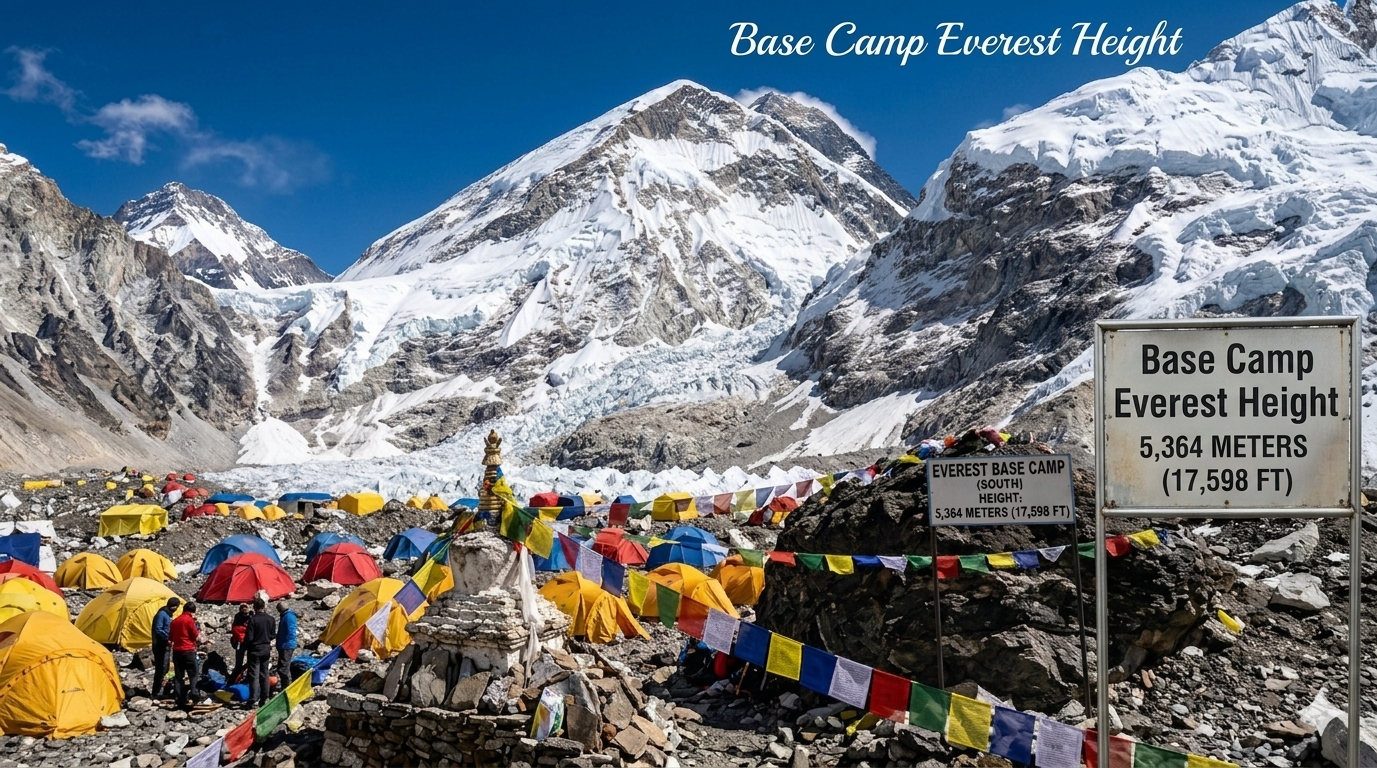
Quick answer: The South Everest Base Camp (Nepal) is about 5,364 m (17,598 ft) above sea level. The North Everest Base Camp (Tibet) is lower, around 5,150 m (16,900 ft). You may see slightly different numbers because the camps sit on glacier terrain and elevation readings vary by map and device.
Base camp Everest height (at a glance)
Base camp Side Approx. elevation Typical access
South Everest Base Camp (EBC) Nepal (Khumbu) 5,364 m / 17,598 ft Trek from Lukla through Namche Bazaar North Everest Base Camp Tibet (China) ~5,150 m / 16,900 ft Road access + short walks (permits/controls required)
Understanding Everest Base Camp (EBC)
What is Everest Base Camp?
Everest Base Camp is the staging area used by Everest expeditions. On the Nepal side, base camp sits on the Khumbu Glacier and becomes a temporary tent city in climbing season. For most travelers, “Everest Base Camp trekking” means walking the classic Khumbu route to the South Base Camp viewpoint area.
Why the height matters for trekkers
The Everest Base Camp elevation isn’t just a fact for trivia—it directly affects safety and comfort. At over 5,300 meters, oxygen levels are significantly lower than at sea level, so you need a plan for acclimatization, pacing, hydration, and rest.
Official height of Everest Base Camp (and why you’ll see different numbers)
EBC elevation above sea level (South Base Camp)
The commonly cited height for South Everest Base Camp is 5,364 m (17,598 ft). Many guidebooks, trekking maps, and travel resources use this value. Your own reading might show a slightly different result because:
- GPS devices differ in accuracy and use different elevation models.
- The ground is not static—South EBC sits on a glacier and moraine.
- The “base camp point” varies depending on where you stand (viewpoint, tents area, nearby ridge).
North Base Camp (Tibet) height
The North Everest Base Camp is often listed around 5,150 m (16,900 ft). Access rules can change, and travel there typically requires additional permits and logistics compared to trekking in Nepal.
Where is Everest Base Camp?
South EBC location (Nepal)
South EBC is in Nepal’s Khumbu region within Sagarmatha National Park. Most treks start with a flight to Lukla (or take longer road alternatives), then follow the Dudh Koshi valley through villages like Phakding, Namche Bazaar, and Dingboche before reaching Gorak Shep and the EBC area.
North EBC location (Tibet)
North EBC lies on the Tibetan plateau side of Everest, near the Rongbuk area. Because the approach is different, the experience feels less like a multi-day village-to-village trek and more like a high-altitude visit with controlled access.
How the height feels: what changes above 4,000–5,000 meters
Many trekkers say the biggest shift happens above about 4,000 meters. You may notice:
- Faster breathing on climbs
- Slower hiking pace (even when you feel “fit”)
- Colder nights and drier air
- More sensitivity to dehydration and poor sleep
These are normal to a point. The key is to recognize when symptoms are progressing toward altitude illness.
Health implications of Everest Base Camp height
Altitude sickness (AMS): common symptoms
At EBC height, mild symptoms are common—especially headaches or sleep disruption. Typical acute mountain sickness (AMS) symptoms include:
- Headache
- Nausea or reduced appetite
- Dizziness
- Fatigue that feels unusual for the effort
- Poor sleep
Danger signs (descend and seek help)
Severe symptoms can be life-threatening. If any of these occur, stop ascending and descend, and get medical help:
- Shortness of breath at rest
- Confusion or unusual behavior
- Difficulty walking straight (loss of coordination)
- Persistent vomiting
- Chest tightness or severe weakness
How to prepare for the height (practical, trek-tested habits)
- Choose an itinerary with acclimatization days: commonly in Namche Bazaar and Dingboche.
- Walk slowly: a steady pace helps your body adapt and reduces overexertion.
- Hydrate consistently: dry air and effort increase fluid loss.
- Eat enough: you burn more calories at altitude even if appetite drops.
- Prioritize sleep warmth: a good sleeping bag and layered clothing matter.
- Discuss altitude medication with a clinician: especially if you have medical conditions or past AMS issues.
Everest Base Camp trek altitude profile (key stops)
If your goal is the classic Mt Everest Base Camp trek, it helps to understand the stepping-stone altitudes. Elevations vary slightly by map source, but these are widely used approximate figures:
- Lukla: ~2,860 m / 9,383 ft
- Namche Bazaar: ~3,440 m / 11,286 ft
- Tengboche area: ~3,860 m / 12,664 ft
- Dingboche: ~4,410 m / 14,469 ft
- Lobuche: ~4,910 m / 16,109 ft
- Gorak Shep (common overnight): ~5,164 m / 16,942 ft
- Everest Base Camp (visit point): ~5,364 m / 17,598 ft
Do you sleep at Everest Base Camp?
Most trekking itineraries do not sleep at EBC. Trekkers typically stay at Gorak Shep, hike to EBC and back, and sleep lower. This “climb high, sleep lower” pattern supports acclimatization and reduces risk.
What about Kala Patthar?
Many trekkers add a sunrise hike to Kala Patthar (a viewpoint above Gorak Shep). It’s not base camp, but it’s one of the most famous viewpoints for Everest. Because it’s higher than EBC, it can feel tougher than the base camp hike itself.
What makes the EBC trek feel difficult (beyond fitness)
People often ask if the trek is “hard.” The trail is not technical (no climbing needed), but difficulty comes from:
- Altitude: you move slower and recovery takes longer.
- Consecutive days: you hike day after day, often 6–8+ days in a row.
- Cold and wind: especially above 4,500 m.
- Basic lodging: teahouses get more limited as you go higher.
Best time to trek to Everest Base Camp (weather and visibility)
Conditions vary year to year, but these patterns are typical:
- Spring (Mar–May): stable weather and the main climbing season. Trails are busy; base camp is active.
- Autumn (Sep–Nov): popular for clear skies and crisp views. Often excellent visibility.
- Winter (Dec–Feb): fewer crowds but colder, with possible snow and closures at higher points.
- Monsoon (Jun–Aug): more rain and cloud cover; flights can be disrupted.
Planning your trek: route context and other Nepal base-camp options
If you’re researching base camp trekking in Nepal, Everest is the most famous—but it’s not the only classic. Depending on your time, altitude tolerance, and the kind of scenery you want, these routes are common comparisons:
- Everest Base Camp Trek Guide (permits, route, seasons, planning details)
- 5-Day Annapurna Base Camp Trek (shorter timeline; still requires smart pacing)
- Annapurna Sanctuary Trek (the classic “sanctuary” approach with a dramatic mountain bowl)
- Manaslu Circuit Trek (remote trekking and high mountain pass experience)
- Upper Mustang Trek (trans-Himalayan landscapes, culture, and rain-shadow climate)
Linking “base camp Everest height” to a safe itinerary
If you’re building an itinerary around the height of base camp Mt Everest, use the elevation to guide your plan rather than trying to “do it fast.” A safer approach usually includes:
- Two acclimatization opportunities (commonly Namche and Dingboche)
- Shorter altitude gains as you get higher
- Flex days for weather, rest, or symptoms
Even strong hikers can struggle if they ascend too quickly. The mountain doesn’t reward speed—your body needs time.
FAQs: Base camp Everest height (AEO-ready)
How high is Everest Base Camp in feet?
South Everest Base Camp is about 17,598 feet (5,364 meters) above sea level.
How high is Everest Base Camp in meters?
South EBC is about 5,364 meters above sea level.
What is the height of base camp Mt Everest on the Tibet side?
The North Base Camp (Tibet side) is commonly listed at around 5,150 meters (about 16,900 feet).
Is Everest Base Camp higher than Annapurna Base Camp?
Yes. South EBC is about 5,364 m, while Annapurna Base Camp is significantly lower (commonly listed around 4,130 m).
Do you need oxygen at Everest Base Camp elevation?
Most trekkers do not use supplemental oxygen at EBC. However, altitude illness is still a real risk—good acclimatization and the willingness to descend are more important than fitness.
Why do some sites list different EBC heights?
Differences come from map data sources, GPS device accuracy, and the fact that South EBC sits on a moving glacier, so the exact camp location can shift.
What is the highest sleeping point on the standard Everest Base Camp trek?
Many itineraries sleep at Gorak Shep (~5,164 m). Some routes also include higher day hikes (like Kala Patthar) before sleeping lower again.
How long does it take to trek to Everest Base Camp?
Many classic itineraries take about 12–14 days round trip from Lukla (including acclimatization). Faster schedules exist, but they increase altitude risk for many people.
Is the Everest Base Camp trek a technical climb?
No. It’s a trekking route on established trails. The challenge is mostly altitude, endurance, and weather, not mountaineering skills.
Can beginners do the Everest Base Camp trek?
Many beginners complete it with training, a sensible itinerary, and good guidance. The main requirement is the ability to hike multiple days in a row and manage altitude conservatively.
What should I do if I get altitude sickness symptoms?
Don’t go higher. Rest, monitor symptoms, and descend if symptoms persist or worsen. Seek professional help—severe altitude illness is an emergency.
Sources and credibility notes (E-E-A-T)
This article uses widely cited reference elevations for the Everest base camps and common Khumbu trekking points. Because exact readings can vary by device and location on glacier terrain, treat the numbers as best-available approximations for planning. Always confirm current conditions, access rules, and health guidance with qualified local professionals and medical providers.
- Reference overview: Everest base camps (overview)
Conclusion: why understanding EBC height matters
The base camp Everest height is more than a number—it shapes your acclimatization plan, safety decisions, and overall experience on the trail. If you build a realistic itinerary, hike steadily, and respect altitude, reaching Everest Base Camp (about 5,364 m) can be one of the most rewarding trekking achievements in the Himalaya.
RELATED TRIPS
Everest Base Camp Trek 12 Days Nepal
Embark on the adventure of a lifetime with the Everest Base Camp Trek, where breathtaking views and rich Sherpa...
Everest Base Camp Kalapathar Trek
Everest base camp trek is an adventure of a lifetime, for anyone who have always dreamed soaring above the...
Everest Base Camp Helicopter Trek
Discover the Everest Base Camp Helicopter Trek: A Journey of Adventure and Culture If you’re seeking breathtaking mountain landscapes...
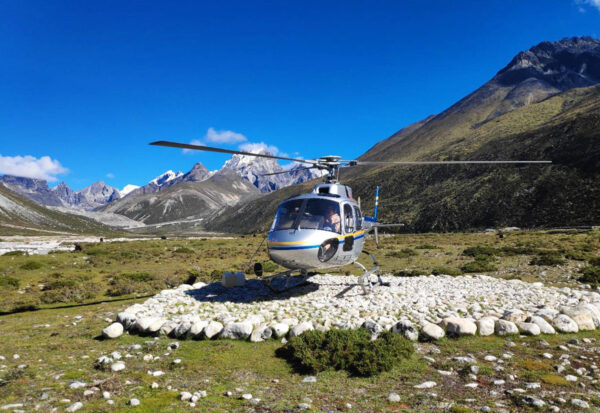
Everest view Helicopter Tour
To see the Mt. Everest is a dream of every one. But everyone cannot trek to that height so...
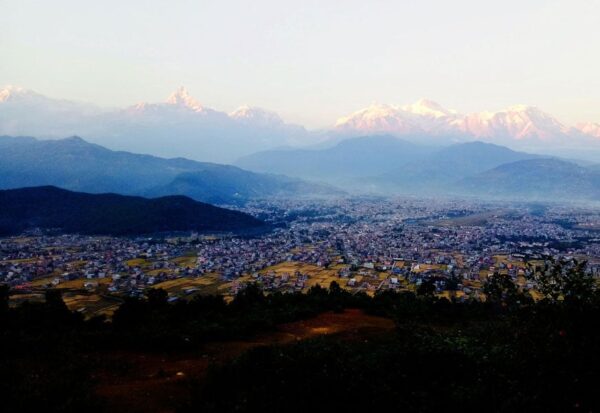
Explore Nepal Tour
Explore Nepal Tour is basically an overview trip of the major destinations in Nepal. From World Heritage sites of...
All Nepal Tour
Nepal Tour Guide's All Nepal Tour covers the highlighted places like Bandipur, Palpa, Pokhara, Chitwan and Lumbini, and is...

